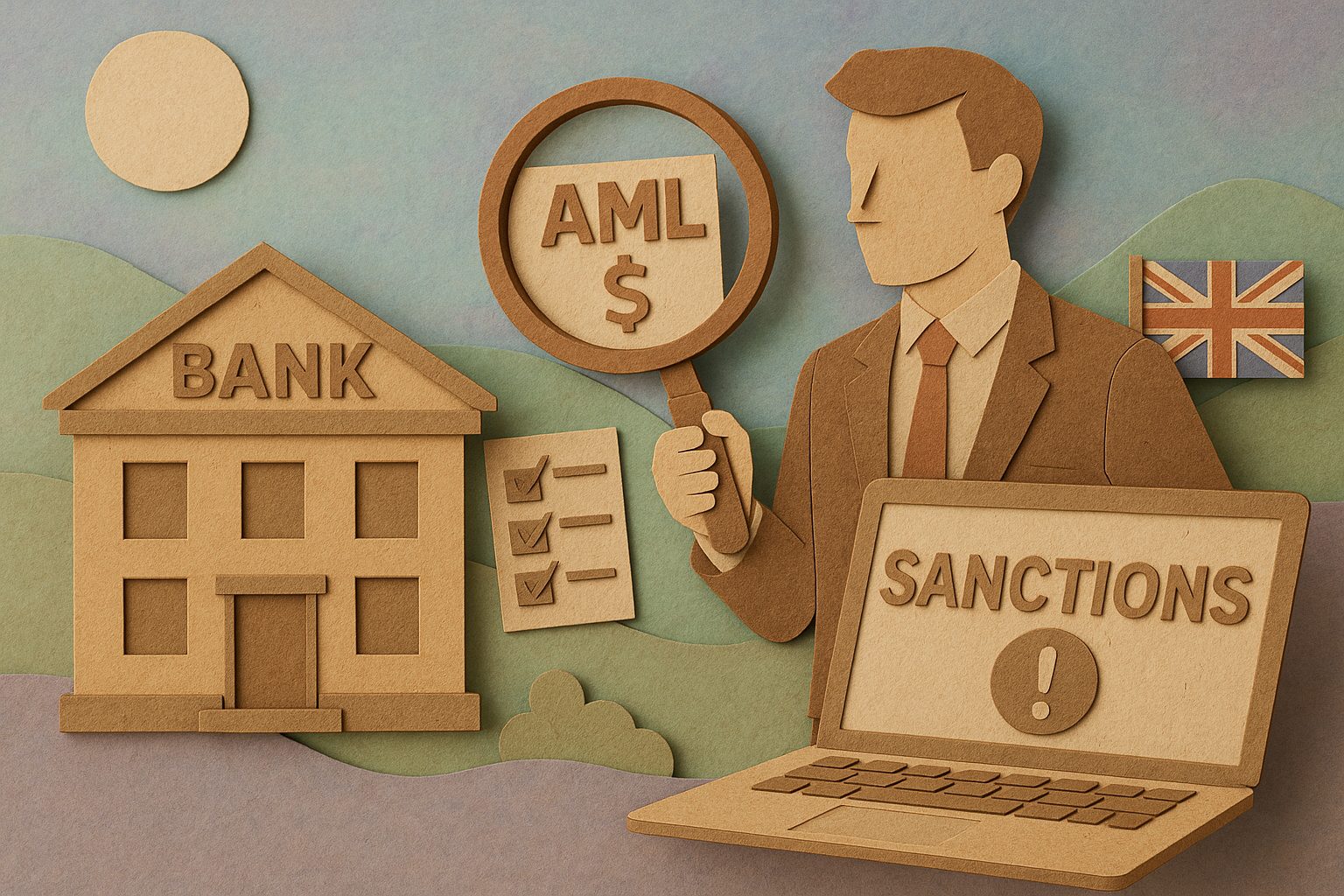
Navigating the Risks of Working with Sanctioned Individuals: 5 Crucial Insights
As recent state conflicts have reminded the global market, the realities of conducting international trade and business is not without its fair share of risk and necessary regulation to avoid further harm. Sanctions serve as a form of intervention and protection for both national communities (i.e. an afflicted country) as well as individuals who are at a much higher risk of being targeted by criminal actives like human trafficking, terrorist funding, and more. Reputable businesses and financial institutions know that conducting with sanctioned individuals and entities is highly ill-advisable and can result in severe legal, financial, and reputational consequences.
Below, we’ll take a closer look at the implications of working with sanctioned individuals as well as the risks associated in doing so. Read on to learn more.
Understanding Sanctions Lists
Sanctions lists, also known as restricted or denied parties lists, are lists mandated and managed by governmental bodies. Sanctions are intended to serve as a form of punitive measures against a national, entity, or individual who are believed (or are known) to have violated serious international laws and/or norms, and present a danger to others. Sanctions lists are regularly updated throughout the international community to include the names of individuals, entities, and countries that are being penalized. In order to ensure you are compliant with the most up to date list of sanctioned individuals, it is essential to make sure your CDD and EDD protocols conduct routine checks on high risk individuals (more on this below).
Sanctions target various types of activities, including trade, financial transactions, and travel, and may also incorporate restrictions such as freezing assets, travel bans, and prohibiting transactions.
Strict Legal Consequences
One of the most critical aspects to understand when dealing with sanctioned individuals or entities is the strict legal consequences of non-compliance. Failing to identify and comply with sanction mandates often result in severe legal consequences for businesses. Negative repercussions for businesses may include:
Financial Penalties: Violators may face substantial fines, which can run into millions or even billions of dollars, depending on the severity of the violation.
Asset Freezing: Sanctions can result in the freezing of assets, making them inaccessible until the sanctions are lifted.
Loss of Licenses: Businesses may lose licenses or permits necessary for their operations.
Criminal Charges: In cases where sanctions and related risks are overtly ignored in an egregious manner, individuals involved in sanctions violations may face criminal charges, leading to imprisonment.
Reputational Harm: Even if legal penalties are not imposed, sanctions violations can seriously damage a company’s reputation, especially on the global level.
It is crucial to note that, due diligence is an expectation of businesses, especially those operating at the international scale, and thus claiming ignorance is rarely accepted as a valid excuse.
The Global Scope of Sanctions
Sanctions are rarely, if ever limited to a singular jurisdiction due to the threat level that must be present to warrant their implementation. Sanctions are typically international in scope, with multiple countries adopting similar penalties for a consolidated approach. That means, choosing to work sanctioned entities doesn’t just affect you on a global level, it likely has global ramifications for vulnerable peoples to contend with along with putting your business at risk. As the international market continuously tries to find a way to regain some form of moderate centralization in an aggressive age of technological expansion and digital adoption, universal compliance is crucial to allowing sanctions to serve as a viable deterrent.
Though it may be difficult for businesses involved in international trade or finances to stay on top of rapidly evolving situations, it is crucial for the safety of the market as a whole that you fulfill your obligation to due diligence and avoid accidental association with dangerous players.
The Importance of Due Diligence
As mentioned above, customer due diligence (CDD) and enhanced due diligence (EDD) are an expectation of businesses that will be interacting with and doing transactions with unknown, questionable, or previously sanctioned individuals or entities. EDD in particular is essential for high risk individuals, and focuses on a much deeper level of know your customer (KYC) data points including the customers in depth background, political leanings, financial history, and more. Where basic CDD starts the process by identifying a customer’s identity, including verifying their name, date of birth, address, and other relevant information, when dealing with high value transactions or increased risk situations, EDD is a necessary.
Building a Better Path Forward
While sanctions may ultimately be considered, at least in part, a reactionary measure to criminal activity, the core intent is to prevent further harm to vulnerable peoples across the globe.
At iComply, we’re proud to partner with businesses across North America and Europe to provide comprehensive KYC, CDD, EDD and AML solutions, all designed to uphold the important objectives that drive the implementation of international sanctions. We know that navigating the ever-evolving realities and challenges of verifying digital users and staying on top of sanctions can be time-consuming and difficult for businesses to manage. Our unique, end-to-end suite of KYC + KYB software utilizes a modular platform that can be integrated into your workflow seamlessly with minimal downtime, and built-in compliance measures for 250 global jurisdictions, making compliance easier than ever.
Contact us today to learn more.
learn more
Is your AML compliance too expensive, time-consuming, or ineffective?
iComply enables financial services providers to reduce costs, risk, and complexity and improve staff capacity, effectiveness, and customer experience.
Request a demo today.

How to Implement Automated KYC Verification for Your Business
In today's fast-paced digital world, navigating the complex regulatory landscape can be a challenge for financial institutions and businesses. One critical aspect of compliance is Know Your Customer (KYC) verification. Manual KYC processes can be time-consuming, prone...

How KYC Software Solutions Revolutionize Compliance and Boost Business Efficiency
In the ever-evolving world of finance, maintaining regulatory compliance is a top priority for businesses. The landscape of financial regulations is continuously shifting, making it crucial for companies to stay ahead of the curve. One of the most effective ways to...

Top 10 Benefits of Implementing KYC Compliance Software for Your Business
Staying current with regulatory compliance is essential in today’s fast-paced financial environment. It can be a daunting task, but the right tools can make all the difference. Implementing KYC (Know Your Customer) compliance software is one of those game-changing...