Digital Securities: Benefits & Use Cases – Free Resource

Digital Securities: Benefits & Use Cases – Free Resource

Digital Securities: Benefits & Use Cases – Free Resource

Blockchain technology is becoming ubiquitous in today’s world–including the world of traditional finance. Global personal wealth surpassed US$200 trillion in 2017, and it’s expected to grow by 7% (CAGR) every year until 2022.

In such a widening pool of available capital, the B2B finance and private markets are ripe for investors to capitalize on new opportunities and for financial institutions to leverage new innovations for wealth management. 

This September, iComply Investor Services Inc. released a new report, Tokenization: Benefits & Use Cases, a comprehensive overview of the Tokenization use cases that exist for digital asset in the traditional financial markets today.

From shareholder equity and corporate bonds to real estate and physical commodities, tokenization of traditional and complex investment products is already happening.

Covering such basics as “What is the legal status of a smart contract?” and “What is a token?”, this resource can help you gain a foundational understanding of this rapidly emerging trend in global private markets.

Blockchain technology is empowering the global financial markets to capitalize on digital investment opportunities–and can be harnessed in your own company.

Explore 6 Major Tokenization Case Studies

Learn how tokenization is being used today, and the potential benefits it can add to your company’s bottom line. You would not want to be without this resource on blockchain for regulated asset management.

Contact us at [email protected] and a member of our team will reach out to explain how tokenization can work for you.

iComply Investor Services (iComply) is an industry leading and award winning Regtech (regulatory technology) company specializing in compliance automation for digital finance. Our suite of enterprise solutions helps companies overcome the cost and complexity of multi-jurisdictional compliance to effectively access new markets and opportunities.

Dimitrij Gede, Business Development, Europe

Dimitrij Gede, Business Development, Europe

Dimitrij Gede joins iComply as Manager of our European offices. His specialized roles within the Luxembourg banking sector have given him a robust perspective on the vital nature that regulation plays within traditional and decentralized markets.

Dimitrij has extensive experience in compliance monitoring programmes, screening and AML/KYC procedures, and client onboarding, while keeping abreast of regulatory changes and identifying potential exposures to organizations. Adept in project management and problem resolution, Dimitrij led the creation and management of a KYC department for a major German bank and liaised with several international partners to ensure that the bank’s KYC procedures enabled smooth client onboarding.

Dimitrij obtained his Masters degree from the University of Trier, writing his thesis on “Anti-Money Laundering and the Creation of Trust Relations in the Financial Market of Luxembourg”; he is also fluent in Russian, German, French and English.

Risk in Digital Assets and Cryptocurrency: What Every CIO and CCO Needs to Know

Risk in Digital Assets and Cryptocurrency: What Every CIO and CCO Needs to Know

Live Webinar: What Financial Institutions Need to Know About Cryptocurrency

Date: Wednesday, September 18, 2019, 11 am -12 pm EST


Public blockchains – and the cryptocurrencies running on them – are here to stay. Capital flows through cryptocurrencies, such as Bitcoin or Ethereum, continue to increase with some analysts forecasting that Bitcoin will soon surpass a $1T USD market cap. Meanwhile, the People’s Bank of China claims their state-backed “crypto RMB” will be “quite similar to” Facebook’s Libra Project, which is yet another project to spark global discussion. How do financial institutions manage risk related to digital assets and cryptocurrencies? 

In this webinar, Dan Peak, Board Advisor at CaseWare RCM and former CEO for World-Check (now Refinitiv) and Greg Pinn,  Head of Product Strategy at iComply Investor Services and former Head of Product at Thomson Reuters World-Check will discuss systematic processes that every financial institution should go through when evaluating the risks associated with cryptocurrencies and effective mitigation strategies.

Join us for this discussion covering:

  • Overview of cryptocurrency and cryptocurrency regulated businesses
  • Business challenges associated with working with cryptocurrencies
  • High-level view of the current regulatory landscape
  • Differences between risks associated with fiat and cryptos
  • How to manage onboarding, screening, transaction monitoring and regulatory reporting with cryptocurrencies

Sponsored by Refinitiv
Serving more than 40,000 institutions in over 190 countries, Refinitiv provides information, insights and technology that drive innovation and performance in global financial markets. Our heritage of integrity enables our customers to make critical decisions with confidence while our best-in-class data and cutting-edge technologies enable greater opportunity.

About Alessa
Alessa (formerly known as CaseWare Monitor), is a product of Caseware International and is used in more than 20 countries by banking, insurance, FinTech, gaming, manufacturing, and retail companies to identify high-risk entities and activities early, engage the business to investigate and remediate any potential issues and comply with regulations. This is achieved by seamlessly making fraud prevention and compliance part of business day-to-day activities.

About iComply
iComply Investor Services Inc. (iComply) is an award-winning software company focused on reducing regulatory friction in the capital markets. With powerful data, verification, and technology solutions, iComply helps companies overcome the cost and complexity of multi-jurisdictional compliance to effectively access new markets. Learn more: iComplyIS.com

Understanding the Distinction of CDD vs. EDD in AML Compliance

Understanding the Distinction of CDD vs. EDD in AML Compliance As cybercrime continues to aggressively expand and pose new challenges to regulators and law enforcement agencies across the globe, anti-money laundering (AML) efforts have become vital to protecting the...

Possibilities and Challenges of AML for Crypto-assets

Possibilities and Challenges of AML for Crypto-assets

Possibilities and Challenges of AML for crypto-assets

Join PwC Luxembourg, LetzBlock and iComply for this special event!

For the first time in Luxembourg, professionals and financial agencies, from both Luxembourg and abroad, will share their visions of Anti-Money Laundering Frameworks for crypto-assets and will explore the possibilities and challenges of AML measures.

Can we trace all crypto-assets?

How does AML really apply to crypto-assets?

The conference will cover current practices, as well as sharing and exchanging thoughts on future frameworks.

Date: Tuesday, September 17, 2019, 12pm – 5:15pm CET
Location: Luxembourg Chamber of Commerce, 7 r. Alcide de Gasperi – Kirchberg, 2981 Luxembourg

Pre-registration is required, space is limited.

About iComply
iComply Investor Services Inc. (iComply) is an award-winning software company focused on reducing regulatory friction in the capital markets. With powerful data, verification, and technology solutions, iComply helps companies overcome the cost and complexity of multi-jurisdictional compliance to effectively access new markets. Learn more: iComplyIS.com

Understanding the Distinction of CDD vs. EDD in AML Compliance

Understanding the Distinction of CDD vs. EDD in AML Compliance As cybercrime continues to aggressively expand and pose new challenges to regulators and law enforcement agencies across the globe, anti-money laundering (AML) efforts have become vital to protecting the...

What is a Stablecoin?

What is a Stablecoin?

Did You Know: Stablecoins

What is a Stablecoin?

A stablecoin is a digital token that is backed by real assets such as fiat currency, with the intention being to reduce volatility.

In the investment world, the term “real assets” means physical things such as real estate, utility companies, airports etc. For example, suppose that a particular stablecoin is represented by assets such as US dollars, and that there is an account holding $1000 that is represented by 1000 ERC20 tokens, a ratio of 1:1. When tokens are backed by legal, audited companies and escrow/trust accounts, it provides a way for people to trade in and out, and essentially digitize these assets.

In short, a stablecoin looks very similar to money market funds or treasury bills, without asset management fees and with significantly less back-office overhead, thanks to the auto-reconciliation properties of blockchains.

There are a few different versions of stablecoins: MakerDAI is one example that uses collateralized currencies to create a stablecoin, whereas Tether and the Gemini dollar are more traditional, and have a portfolio of US dollars that are audited and the companies create tokens against these – there are quite a few projects around the world doing the same for the Euro, Japanese Yen, Swiss Franc, and others. A third type of stablecoin was created by companies such as Basis, which is no longer in operation, but attempted to create an algorithmic central bank.

The fourth type of stablecoin is significant, these coins are represented by a pool of assets such as commodities, such as a stablecoin represented by three holdings, gold, sugar and timber, for example. This could also be a basket of currencies, similar to what Facebook’s Libra is attempting to create. This model is designed to provide a stable, secure and efficient mechanism for transmitting value that is actually backed by something of value, each token then represent a fractional ownership in that value. The difference here is ultimately the technological efficiencies, such as increased speed, that a tokenized pool of assets has compared to traditionally managed assets, funds, and portfolios. 

Recently, we covered an article on Central Banks and Public Blockchains demonstrating another government application for public blockchain technology. While we have yet to see a central bank issue their own stablecoin, feasibility studies are being conducted in China, the European Commission and major corporate interests such as Facebook’s Libra. As more of the major tech players move into the fintech space we can expect to see many new stablecoin initiatives – including traditional short term asset structures such as treasury bills, money market funds, and cash equivalent derivatives. For more in-depth research and insights into stablecoins check out this recent report “What Are Stablecoins” from CB Insights. 

Creating, auditing, and managing a stablecoin requires proper planning and preparation, starting right at the earliest stages of company formation and jurisdiction shopping. Contact us to learn more about how iComply, with our network of over 100 service providers globally, can help you realize the benefits and competitive advantages of real asset tokenization – including stablecoins.

About iComply Investor Services Inc.
iComply Investor Services Inc. (iComply) is an award-winning software company focused on reducing regulatory friction in the capital markets. With powerful data, verification, and technology solutions, iComply helps companies overcome the cost and complexity of multi-jurisdictional compliance to effectively access new markets. Learn more: iComplyIS.com

Understanding the Distinction of CDD vs. EDD in AML Compliance

Understanding the Distinction of CDD vs. EDD in AML Compliance As cybercrime continues to aggressively expand and pose new challenges to regulators and law enforcement agencies across the globe, anti-money laundering (AML) efforts have become vital to protecting the...

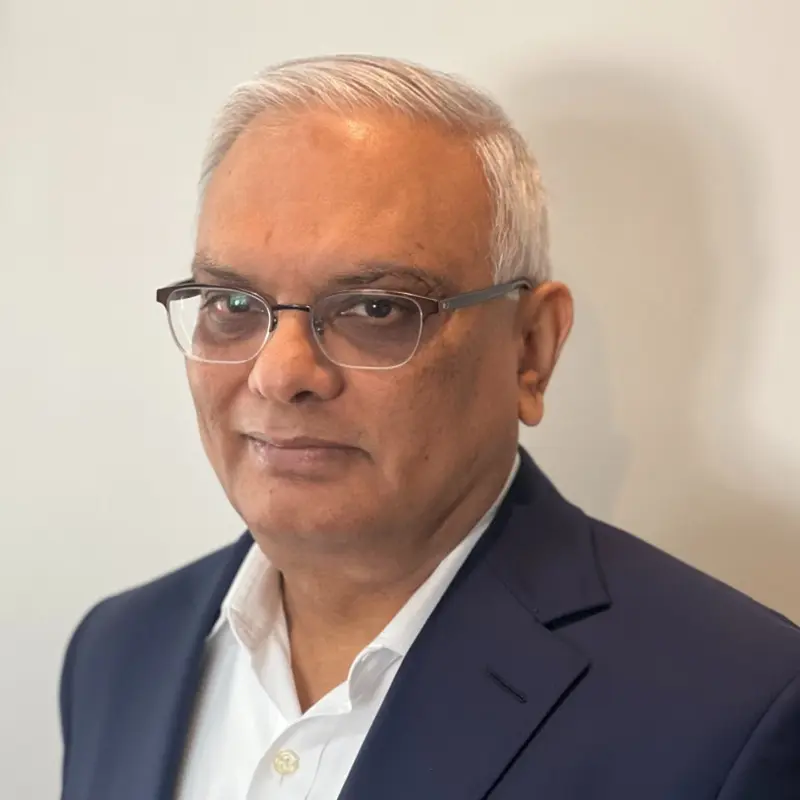
Vaidyanathan Chandrashekhar

Vaidyanathan Chandrashekhar

Advisors

“Chandy,” is a technology and risk expert with executive experience at Boston Consulting Group, Citi, and PwC. With over two decades in financial services, digital transformation, and enterprise risk, he advises iComply on scalable compliance infrastructure for global markets.
Thomas Linder

Thomas Linder

Advisors

Thomas is a global tax and compliance expert with deep specialization in digital assets, blockchain, and tokenization. As a partner at MME Legal | Tax | Compliance, he advises iComply on regulatory strategy, cross-border compliance, and digital finance innovation.
Thomas Hardjono

Thomas Hardjono

Advisors

Thomas is a renowned identity and cybersecurity expert, serving as CTO of Connection Science at MIT. With deep expertise in decentralized identity, zero trust, and secure data exchange, he advises iComply on cutting-edge technology and privacy-first compliance architecture.
Rodney Dobson

Rodney Dobson

Advisors

Rodney is the former President of ADP Canada and international executive with over two decades of leadership in global HR and enterprise technology. He advises iComply with deep expertise in international service delivery, M&A, and scaling high-growth operations across regulated markets.
Praveen Mandal

Praveen Mandal

Advisors

Praveen is a serial entrepreneur and technology innovator, known for leadership roles at Lucent Bell Labs, ChargePoint, and the Stanford Linear Accelerator. He advises iComply on advanced computing, scalable infrastructure, and the intersection of AI, energy, and compliance tech.
Paul Childerhose

Paul Childerhose

Advisors

Paul is a Canadian RegTech leader and founder of Maple Peak Group, with extensive experience in financial services compliance, AML, and digital transformation. He advises iComply on regulatory alignment, operational strategy, and scaling compliance programs in complex markets.
John Engle

John Engle

Advisors

John is a seasoned business executive with senior leadership experience at CIBC, UBS, and Accenture. With deep expertise in investment banking, private equity, and digital transformation, he advises iComply on strategic growth, partnerships, and global market expansion.
Jeff Bandman

Jeff Bandman

Advisors

Jeff is a former CFTC official and globally recognized expert in financial regulation, fintech, and digital assets. As founder of Bandman Advisors, he brings deep insight into regulatory policy, market infrastructure, and innovation to guide iComply’s global compliance strategy.
Greg Pearlman

Greg Pearlman

Advisors

Greg is a seasoned investment banker with over 35 years of experience, including leadership roles at BMO Capital Markets, Morgan Stanley, and Citigroup. Greg brings deep expertise in financial strategy and growth to support iComply's expansion in the RegTech sector.
Deven Sharma

Deven Sharma

Advisors

Deven is the former President of S&P and a globally respected authority in risk, data, and capital markets. With decades of leadership across financial services and tech, he advises iComply on strategic growth, governance, and the future of trusted data in AML compliance.